
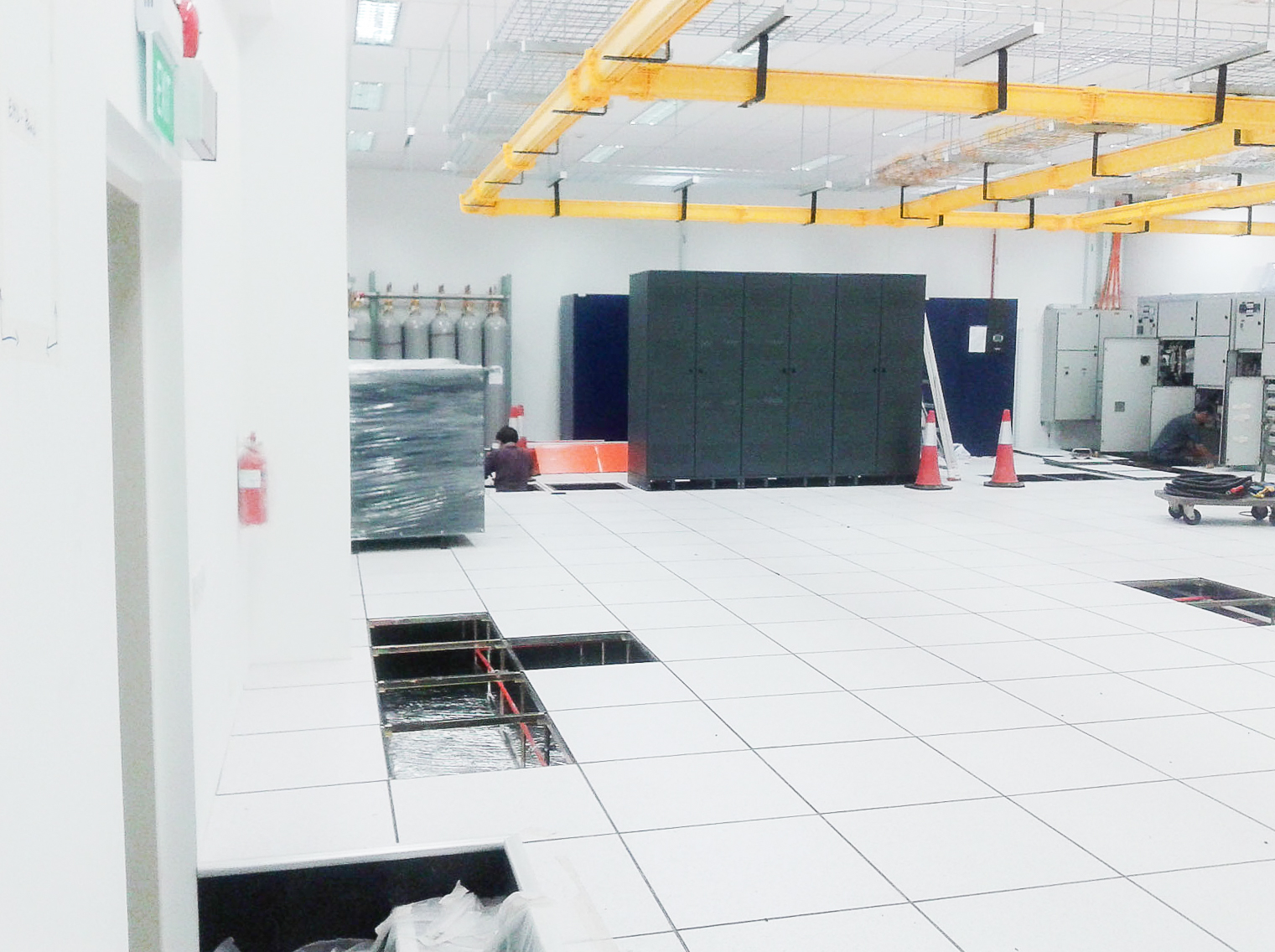
When buyers in Saudi Arabia, the UAE, Qatar, Oman, and neighboring markets source a raised access floor for data centers, they are usually balancing several pressures at the same time: ambient heat, high cooling loads, strict uptime expectations, and a fast-moving project schedule. In these environments, raised flooring is not just a finishing material. It becomes part of the infrastructure strategy for cable management, maintenance access, and in some projects, underfloor air distribution.
A weak selection can create maintenance headaches, unstable support conditions, or surface performance issues over time. A well-selected system makes future cable changes easier, supports technical rooms with cleaner organization, and helps project teams maintain a more serviceable data center floor layout.
What matters most in a hot-climate data center
- Stable panel performance under continuous equipment operation and facility traffic
- Reliable support structures for larger raised floor heights and dense cable zones
- Compatibility with anti-static requirements for sensitive equipment rooms
- Practical maintenance access for teams working in live technical environments
- Clear documentation for panel load class, system height, and project accessories
Buyer focus for the Middle East
In Gulf-region projects, the best raised floor decision is usually the one that combines stable structure, easy maintenance, and a support system that matches real cable density and plant room conditions, not just a low panel price.
Steel raised floor is still the main workhorse
For many data center and server room projects, steel anti-static raised floor remains the most practical baseline solution. It is widely specified, well understood by contractors, and flexible enough to work with multiple support heights and accessories. For buyers serving colocation rooms, telecom spaces, and large technical corridors, steel systems often deliver the best balance of cost, modularity, and long-term serviceability.
When calcium sulphate is worth considering
Calcium sulphate raised floor is often chosen where higher flatness, stable panel consistency, and a more premium technical finish are needed. It can be a strong option for support spaces, mixed technical-commercial projects, and projects where both infrastructure access and floor appearance matter. Buyers should still confirm load class, finish type, and support structure specification rather than assuming all calcium sulphate systems perform the same.

Questions importers and contractors should ask before buying
| Question | Why It Matters |
|---|---|
| What is the final floor height? | Support structure and rigidity change significantly with installation height. |
| Will the project use underfloor air supply? | Airflow planning can affect panel selection and accessory choice. |
| What is the concentrated load requirement? | Equipment areas and service aisles may need different load performance. |
| Which finish is required? | HPL, PVC, conductive surfaces, and bare panel systems serve different project conditions. |
| Are accessories included? | Stringers, pedestals, grilles, lifters, outlet boxes, and grommets affect the complete system cost. |
Recommendation for buyers targeting uptime and maintainability
If the project is a standard technical room or server room, start from a steel anti-static raised floor system with a correctly selected pedestal and stringer package. If the project requires a more premium or mixed-use finish, compare it with a calcium sulphate raised floor system with matching support hardware. The key is to source the floor as a system, not as loose components from unrelated suppliers.
Related Products for This Topic
Steel Anti-Static Raised Floor
Reliable solution for data centers, server rooms, telecom spaces, and technical maintenance access.
View product

Calcium Sulphate Raised Floor
Suitable for premium technical and commercial projects requiring flatness and finish flexibility.
View product

Pedestal and Stringer System
Critical structural support for data center floor height, stability, and cable access planning.
View product